Draft from a SKU fact sheet
Keep material, measurements, pack quantity and variant unchanged. List missing facts separately instead of guessing.
FIND TOOLS BY TASK
Prepare product titles, descriptions, attributes, and reviewed catalog publishing or multichannel sync. Check the platform fit and access requirements in each listing.
Separate writing a product description from publishing it. Start with a verified SKU fact sheet, review the generated fields, then validate any store connector on one product before considering a batch.
Keep material, measurements, pack quantity and variant unchanged. List missing facts separately instead of guessing.
Verify keyword relevance, required product attributes and applicable category rules. Review every claim before publishing.
Confirm the source of truth, field mapping, permissions, preview and rollback. A successful draft does not prove a successful sync.
Starting points for comparison, not a performance ranking. Product profiles provide official sources, review dates and testing limits.


An account-connected commerce assistant for keyword research, listings, and business insights.
Eligible Helium 10 plan required


Shopify’s built-in assistant for questions, content, and supported tasks in your store admin.
Included with Shopify · Plan limits apply
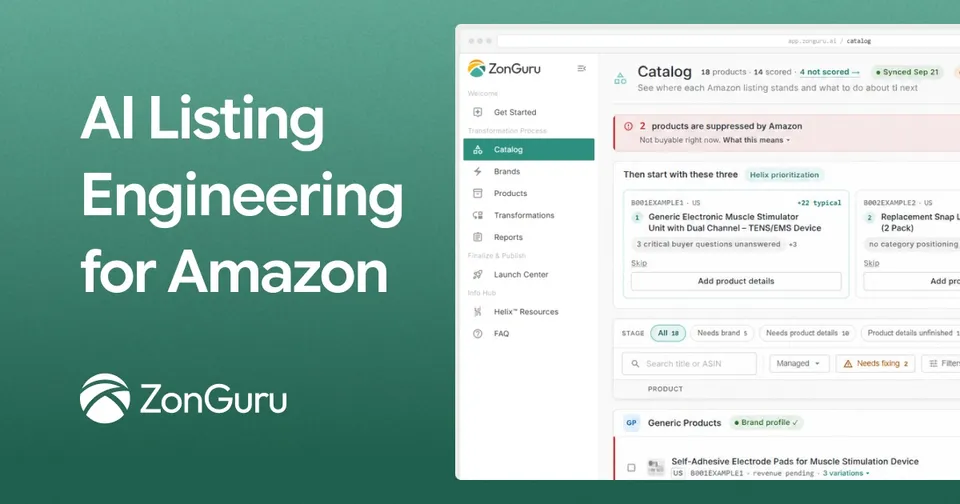

Amazon listing analysis, AI-assisted listing changes, monitoring, and supported publishing workflows.
Check current Helix plans · Enterprise on request


Amazon research, listing analysis, reporting, and AI or rule-based advertising optimization.
Self-serve and service pricing vary


Generate and enrich product content in bulk, with catalog imports and advertised Shopify publishing.
Pay per product · High-volume quote
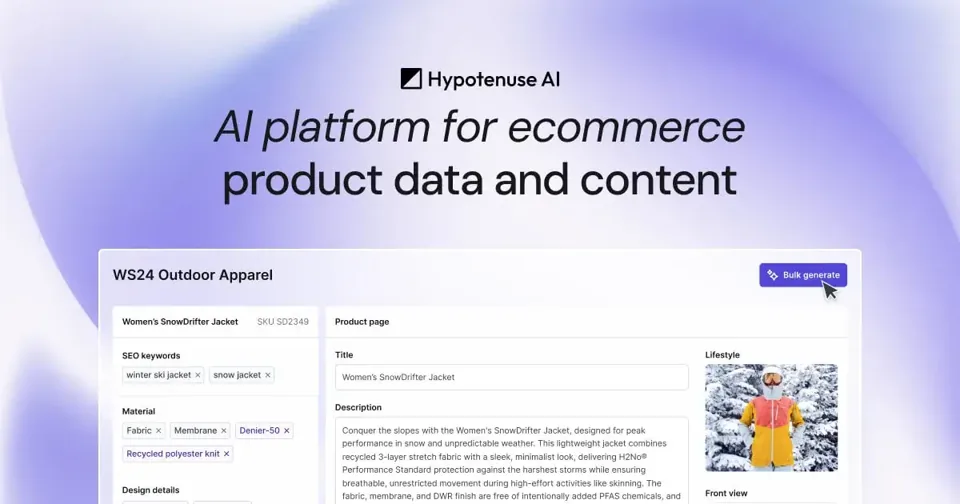

Specialized catalog agents for product data, descriptions, image preparation, and approval-based content workflows.
Custom ecommerce plans · Trial advertised


Prepare and publish multichannel listings with AI-assisted inputs, templates, and connected catalog sync.
Paid listing plans · 7-day trial
Product feed software for importing, mapping, validating and distributing catalogs to advertising and commerce channels.
Starter USD 288/year · 14-day trial
A Shopify app for preparing product images, SEO titles and descriptions, with a documented preview-and-edit workflow before publication.
Free plan · Paid plans available
CSV and TSV catalog software for reviewing data-quality issues, applying reversible cleanup rules and exporting corrected files before channel submission.
Free local audits · Cloud plans advertised
A listing-copy tool for drafting marketplace titles, tags, bullets and descriptions from product facts, with a manual review-and-copy workflow.
Free previews · Paid credit packs or subscription
Helium Agent helps prepare Amazon content; ZonGuru Helix advertises reviewed Amazon publishing. Describely advertises a Shopify connector, Hypotenuse describes catalog agents and connected publishing, and LitCommerce handles supported multichannel listings and synchronization. Choose by your source catalog, destination market, required fields, and who approves the change.
Give the workflow verified product facts, SKU and variant mappings, approved images, and channel-specific requirements. Keep unknown facts empty or flagged. Review generated content before publication and test one product first. Check price, inventory, tax, fulfillment, and sync behavior separately from copywriting.